


To survive in your car for an extended time, start by preparing your vehicle with regular maintenance and an emergency kit. Pack essential supplies like non-perishable food, water, blankets, and a first aid kit. Keep your car clean and maintain hygiene with items like hand sanitizer and baby wipes. Stay visible by using hazard lights and reflective materials, and communicate clearly with others to signal for help. Focus on your mental well-being with positive thoughts and mindfulness. By being proactive and staying informed about your surroundings, you'll enhance your chances of staying safe and comfortable during challenging situations.
Preparing Your Vehicle
To ensure you're ready for an extended stay in your car, start with thorough vehicle preparation. First, focus on vehicle maintenance. Check your oil and fluid levels, making sure they're fresh and at the correct levels. Don't forget to inspect your tire pressure; underinflated tires can affect handling and safety on the road. Also, examine the battery condition. If your car will be stationary for a long time, consider using a trickle charger to keep the battery healthy. Additionally, it's important to regularly check oil and fluid levels to maintain vehicle performance and avoid potential breakdowns. Regular braking will also remove rust from brake rotors, ensuring they function effectively when needed.
Next, think about storage solutions for your vehicle. Store it in a clean, dry place to prevent rust. Filling the gas tank completely will also help avoid rust caused by condensation. Before you park, change the oil and lubricate exposed metal surfaces. This protects against rust and wear. If you plan to leave your vehicle for an extended period, place it on jack stands to relieve pressure from the tires.
Lastly, stay organized. Keep a list of emergency contacts and roadside assistance numbers in your car. Ensure you have all the necessary navigation tools, like an updated GPS or maps, and a car charger for your smartphone. Regular checks and adherence to your vehicle's service schedule will help keep everything in good shape. By taking these steps, you'll ensure your car is well-prepared for an extended stay, allowing you to focus on what really matters when the time comes.
Essential Survival Kit Items
A well-prepared survival kit can be a lifesaver during an unexpected car stay. You never know when you might find yourself stranded, so having the right emergency gear is crucial. Here are some essential survival items to keep in your car.
- Emergency Food and Water: Store water in plastic or collapsible bottles. Include non-perishable food items like energy bars, ensuring you have enough for everyone, including pets. These foods can withstand different temperatures without spoiling. Additionally, having sufficient water supply is vital to prevent dehydration during extended roadside emergencies.
- First Aid Kit: A well-stocked first aid kit is a must. Include bandages, antiseptic wipes, hand sanitizer, and pain relief medications. Don't forget antibiotic ointment and a bleeding control kit for serious injuries. Consider adding vehicle first aid kits that are specifically designed for emergencies while traveling.
- Shelter and Comfort: Pack blankets, gloves, and heat packs for cold weather. If it's hot, consider adding portable fans. An emergency bivvy sack or sleeping bag will help keep you warm and comfortable.
- Navigation and Tools: Include a handheld GPS unit and physical maps in case your phone dies. A multi-tool with various functions can be invaluable, along with jumper cables, a flashlight, and a spare tire.
Maintaining Safety and Visibility
Even with a well-prepared survival kit, knowing how to maintain safety and visibility is vital when you're stranded in your car. Start by ensuring your car maintenance is up to date before winter, checking the brakes, lights, battery, and other essential systems. Keeping your gas tank at least half full is crucial, too. If you find yourself stuck during a heavy snowstorm, stay inside your vehicle, making sure to keep the radiator and exhaust pipe clear of snow. Additionally, having a first aid kit on hand can provide peace of mind and essential supplies in case of minor injuries.
To enhance your visibility and attract attention, use your hazard lights. At night, keep your interior lights on to make your car more noticeable. You can also apply reflective tape to your bumpers or tie a bright-colored cloth to the radio antenna to signal for help during the day. During nighttime, frequently use dome lights or flashlights to increase visibility.
If you need to signal for help, use three loud horn blasts, three flashes of light, or three waves of your arms. Carrying a whistle is a smart idea, as it can be heard from farther away than your voice. Utilizing hazard lights can significantly increase your visibility to rescuers, particularly in low-light conditions. If conditions permit, create a signal fire, as its smoke can help rescuers locate you. Lastly, always ensure at least one window is slightly open for ventilation to prevent carbon monoxide buildup. By following these tips, you'll maximize your safety and visibility while stranded.
Effective Communication Strategies
Effective communication strategies on the road can make a significant difference in ensuring both your safety and that of others. Understanding the indicator importance and practicing courteous behaviors can help create a smoother driving experience. Here are some key strategies to enhance communication:
- Use Indicators: Always signal your intentions by using indicators when turning or changing lanes. This alerts other drivers and helps prevent accidents. Indicators are a critical safe driving practice that reinforces the importance of signaling.
- Maintain Eye Contact: When at intersections or crosswalks, make eye contact with pedestrians or drivers. This simple act confirms that you see each other and can help avoid misunderstandings. Active listening during these interactions can further enhance clarity and safety.
- Utilize Horns Sparingly: Your horn should only be used to alert others of immediate danger. Overusing it can create tension and confusion on the road.
- Practice Courtesy: Allow other drivers to merge or change lanes when safe. Polite actions like these reduce road tension and promote harmony among drivers.
Incorporating these strategies into your driving habits not only improves safety but also fosters a more pleasant environment for everyone on the road. Remember, effective communication isn't just about the words or signals you use; it's also about being aware of others and practicing patience. By combining clear signaling with courteous behaviors, you can contribute to a safer driving experience for yourself and others.
Navigating in Emergencies
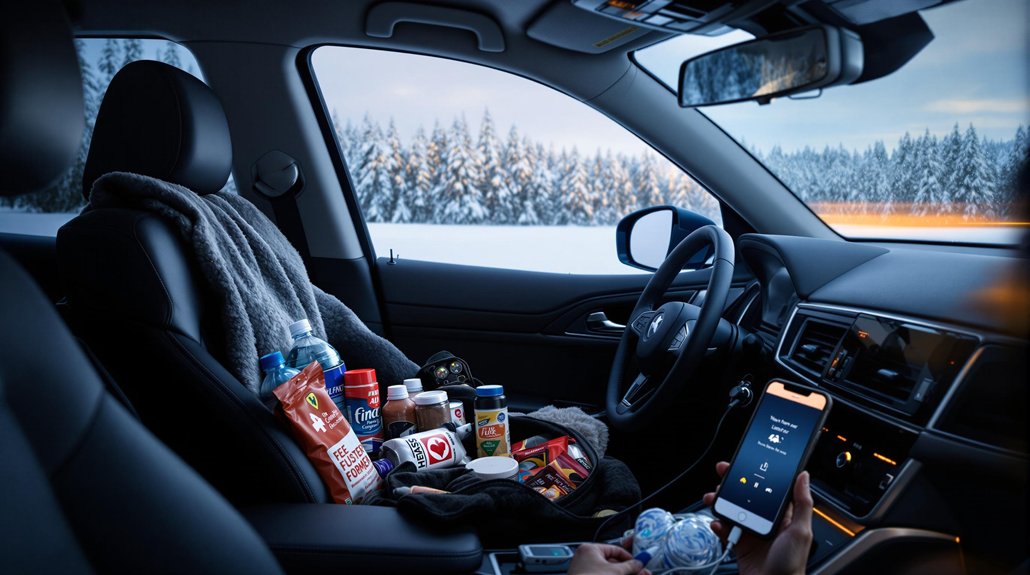
When emergencies arise on the road, quick and informed decision-making is vital for your safety. First, make sure you stay visible. Turn on your hazard lights to alert other drivers, and if you can, move your vehicle out of traffic. Place emergency reflective triangles around your car or tie a bright cloth to your antenna. This helps signal your presence to others.
If you find yourself in flooded areas, avoid driving through water covering the road, as it can cause hydroplaning. If you must navigate through water, drive slowly and ease off the gas if you start to lose traction. Open windows or sunroofs if doors become stuck due to water pressure, and be prepared to break glass if necessary for escape. OnStar can trigger Automatic Crash Response for immediate help if you find yourself in a dangerous situation. Additionally, modern autonomous vehicles are being developed to assist in emergencies by navigating to safe roadside locations if a driver is unable to do so.
Handling skidding is also crucial. Avoid sudden acceleration or braking, as this can lead to spinning. Instead, slowly release the gas pedal and steer in the direction of the spin to regain control. If your vehicle stops upside down, turn off the ignition and evacuate.
In case of an emergency brake failure, use gentle braking to slow down. Pump the brake pedal to build pressure, or apply the parking brake slowly if needed. Always steer toward a safe location to stop, like an open area or uphill. Keep emergency supplies handy, and don't hesitate to call for roadside assistance if you need help navigating through these situations.
Health and Hygiene Practices
Maintaining health and hygiene in your car is essential for overall well-being, especially during extended trips or emergencies. By keeping your car clean and stocked with necessary sanitation supplies, you can help prevent infections and ensure comfort. Here are some key practices to follow:
- Regularly clean the interior: Wipe down surfaces like the dashboard and seats to remove dirt and germs. This ensures car cleanliness and a healthier environment.
- Store trash properly: Use sealed bags for trash to minimize odors and maintain hygiene. Regularly dispose of these bags outside the car to prevent clutter and mess.
- Pack essential hygiene items: Include items like hand sanitizer, baby wipes, and toilet paper. These will help you stay clean and comfortable during long periods in your vehicle.
- Keep a first aid kit handy: A comprehensive kit should include bandages, antiseptic wipes, and personal medications. This ensures you're prepared for any minor injuries or health issues.
Additionally, make sure to ventilate your car periodically to prevent moisture buildup, and avoid eating inside to reduce food waste. With these health and hygiene practices in place, you'll be better equipped to handle extended time in your car, keeping both you and your environment as clean and safe as possible.
Insulating Your Car for Warmth
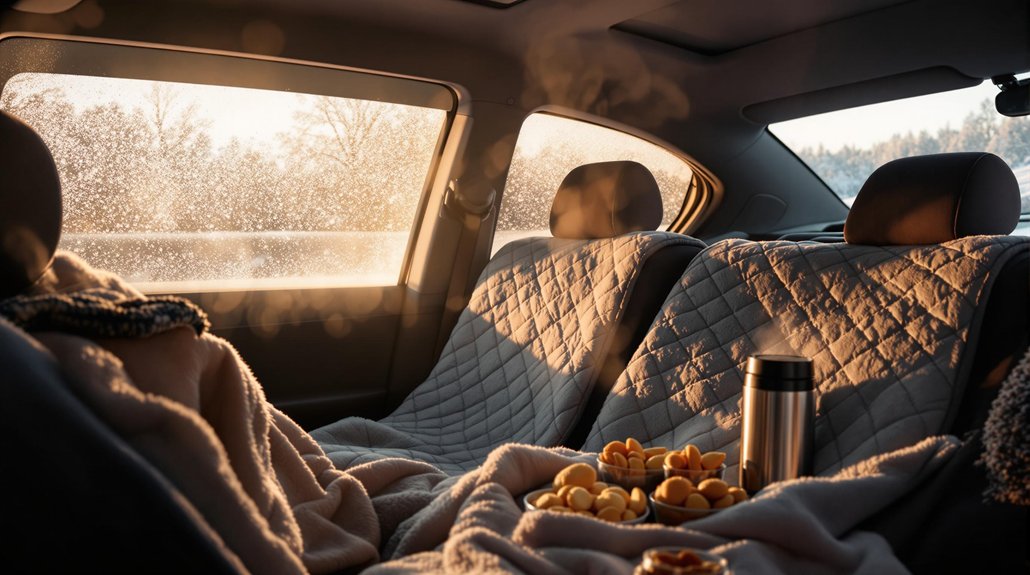
Staying warm in your car during cold weather is just as important as keeping it clean. To create a cozy environment, focus on effective window insulation and thermal barriers. Start by applying reflective insulation materials to your windows. These materials reflect heat back inside, helping maintain warmth. Don't forget to cover your windshield with a snow cover; this simple step prevents cold air from sneaking in and preserves heat.
For enhanced protection, consider using reflective films on the inside of your windows. This blocks out solar radiation and reduces heat loss. Make sure to insulate both your front and back windshields. You can also use thermal mats or heat shields to further reflect warmth. Quality heat shields can stop over 90% of heat transfer, so invest in high R-value insulation materials.
When it comes to vehicle preparation, preheating your car is key. Use the HVAC system to warm up the interior before you settle in for the night. You can also run the engine briefly to create a warm cabin environment. Insulating the floorboard and applying underhood insulation will help keep the warmth inside while preventing cold air from creeping in.
Lastly, always ensure proper ventilation to avoid carbon monoxide buildup. With these insulation techniques, you'll create a snug, warm space in your car during those chilly nights, making your situation much more bearable.
Rationing Food and Water
Survival in your car hinges on effective rationing of food and water, especially during extended periods of confinement. Proper management will help you stay nourished and hydrated. Here are some food rationing strategies and water conservation techniques to consider:
- Daily Water Needs: Aim for at least two quarts of water each day. Always drink what you need today, and try to find more for tomorrow.
- Food Selection: Choose foods high in liquid content. Canned fruits and vegetables are good options. Avoid salty snacks, as they increase your thirst.
- Emergency Water Sources: Identify nearby rivers or lakes. If you're in a safe area, these can provide additional water, but remember to purify it before drinking.
- Storage Recommendations: Store at least one gallon of water per person, per day, in food-grade containers. Regularly check and rotate your supplies to keep them fresh.
While healthy adults can survive on half their usual food intake for a while, children and pregnant women shouldn't ration food. Instead, keep an emergency supply of non-perishable, high-calorie foods, like canned goods, which are easy to prepare. Use airtight plastic bags for storage and replace items every six months to maintain quality.
Managing Physical and Mental Well-being
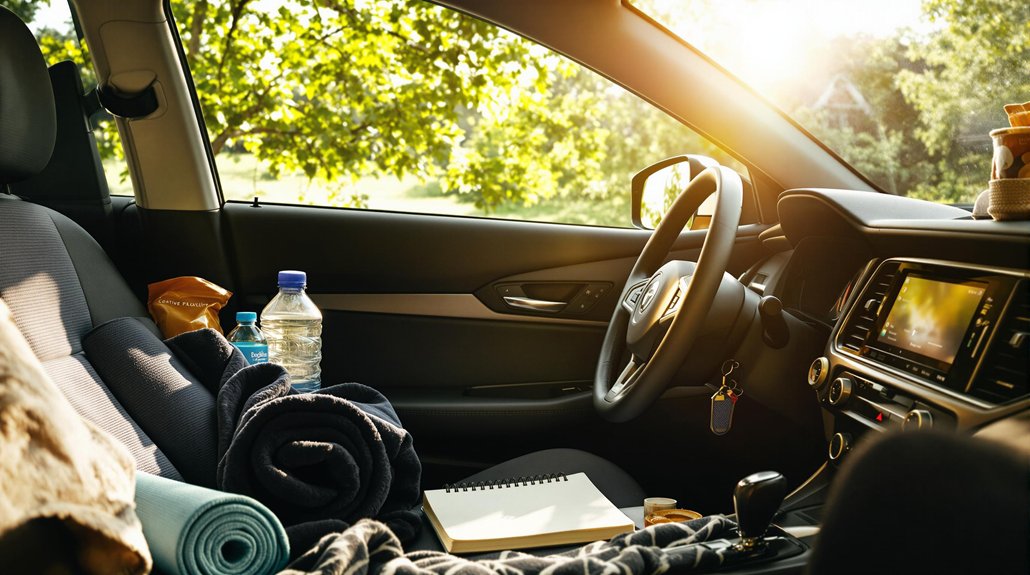
When you're confined in your car for an extended period, managing your physical and mental well-being becomes crucial. Start with hydration strategies. Aim for at least 1.5 to 2 liters of water daily, adjusting for your age, size, and activity level. Regularly sipping water helps you stay alert and energized.
Next, incorporate exercise routines. Even in a limited space, simple movements can keep your joints flexible. Aim for at least 150 minutes of moderate activity each week. This could include stretching, seated exercises, or even short walks if it's safe outside.
To help you stay organized, here's a table outlining some essential practices:
'''markdown
| Aspect | Tips | Frequency |
|---|---|---|
| Hydration | Drink water regularly | Daily |
| Exercise | Stretch and move around | 3-5 times a week |
| Sleep | Aim for 7+ hours | Nightly |
| Mindful Activities | Read or play games | Daily |
| Stress Management | Deep breathing exercises | As needed |
'''
Apart from these, make sure you have a first aid kit and emergency supplies on hand. Keeping your mental health in check is just as important. Engage in mindful activities, stay connected with loved ones, and monitor your feelings. Entertainment, like books or puzzles, can also help keep your mind active. Taking care of both your physical and mental well-being will make your time in the car more manageable.
Signaling for Help
If you find yourself in a situation where you need help while stuck in your car, signaling effectively is essential. Using the right signaling techniques can increase your chances of getting rescued. Here are four effective distress signals you can use:
- Hazard Lights: Turn on your hazard lights to alert other drivers that you're in trouble. This is one of the most recognized signals for roadside assistance.
- Raising the Hood: Popping your hood is a clear indication to others that your car has a mechanical issue. It might encourage passing drivers to stop and help or call for assistance.
- Distress Flags: If you have a red cloth or flag, attach it to your antenna or wave it out of the window. This is a universal signal of distress that can attract attention.
- Horn Blasts: Use your car horn to send three loud blasts. This is an internationally recognized distress signal and can alert nearby people to your situation.
Dealing With Severe Weather
Dealing with severe weather while stuck in your car can be daunting, yet being prepared can significantly enhance your chances of staying safe. First, make sure your vehicle is equipped with an emergency kit. This should include a first aid kit, flashlight with extra batteries, jumper cables, blankets, and tools like an ice scraper. These emergency supplies are crucial for weather preparedness.
Next, manage your food and water resources wisely. Always keep bottled water and non-perishable, high-calorie food in your car. In extreme situations, you can melt snow for drinking water. Also, pack tools for food preparation, including utensils.
It's essential to consider weather-specific safety measures. If you're in a winter storm, tire chains are vital for traction. Carry sand or cat litter to help if you get stuck. A battery-powered or portable radio will keep you informed about weather updates. Hand warmers are a smart addition to your emergency supplies, ensuring you stay warm.
Finally, plan for long-term survival. Bring extra clothing, including gloves, hats, and scarves to stay warm. Carry basic repair tools and fire-starting tools like matches or candles. Methods to signal for rescue, such as emergency whistles, can also be life-saving. By following these steps for weather preparedness, you can greatly increase your chances of enduring severe weather while stuck in your car.
Keeping a Positive Mindset
Surviving challenging situations in your car isn't just about physical preparedness; your mindset plays a vital role too. Keeping a positive mindset helps manage stress and can make a tough situation feel more bearable. Here are some practical tips to stay positive while you're confined in your vehicle:
- Practice positive affirmations: Repeat uplifting phrases like "I am safe" or "This too shall pass" to boost your morale.
- Utilize deep breathing: When you feel anxious, take deep breaths. Inhale slowly, hold for a moment, and exhale. This simple exercise helps calm your nerves.
- Maintain a reflection journal: Jot down your thoughts and things you're grateful for. This can shift your focus from negative feelings to the good around you.
- Create a positivity playlist: Compile your favorite upbeat songs. Listening to music can elevate your mood and distract you from stress.
Sharing Responsibilities With Others

Sharing responsibilities with others can significantly enhance your ability to manage challenges while in your car. When you're sharing a vehicle, it's essential to establish clear sharing agreements. These agreements outline how you'll split costs, such as insurance, registration, and repairs. It's important to keep track of receipts and reconcile expenses regularly so everyone knows their share.
You should also agree on a schedule for vehicle use. Consider how long each person will need the car and discuss what to do for long trips or if someone needs to rent a vehicle. Make sure everyone understands restrictions, like not lending the vehicle to unlicensed drivers or using it for smoking, to avoid conflicts later.
Conflict resolution is crucial in any shared arrangement. If disagreements arise, use methods outlined in your sharing agreement, such as mediation, to resolve issues. Specify how to end the agreement if needed, as well as procedures for selling the vehicle and splitting any proceeds.
Lastly, review the agreement with an attorney to ensure it covers all necessary details, like maintenance responsibilities and indemnification clauses for accidents. By sharing responsibilities and being organized, you can make your time in the car more manageable and enjoyable, minimizing the stress that can come from conflicts or misunderstandings.
Understanding Local Regulations
Understanding local regulations is crucial for anyone spending extended periods in their car. Knowing local laws and emergency protocols can make a significant difference in your survival and safety. Here are a few things you should keep in mind:
- Emergency Kits: Check local recommendations for roadside emergency kits. Items like jumper cables, flashlights, and first aid kits can be lifesavers.
- Vehicle Use in Emergencies: Understand how to use your vehicle as shelter. Even if the engine is damaged, battery power can help with lighting or communication.
- Visibility: Keep reflective safety vests and signs in your vehicle. These are essential for being seen, especially at night or during poor weather conditions.
- Maintenance Laws: Regular vehicle maintenance isn't just good practice; it's often legally required. Make sure your car is in safe working order before any long trip.
Familiarizing yourself with these aspects of local regulations can help you navigate difficult situations more effectively. Always prepare in advance, and make sure your emergency kit is updated regularly. By understanding these local laws and emergency protocols, you can stay safer and more comfortable while in your car. Remember, knowledge is power, especially in unexpected circumstances.
Seeking Assistance When Possible
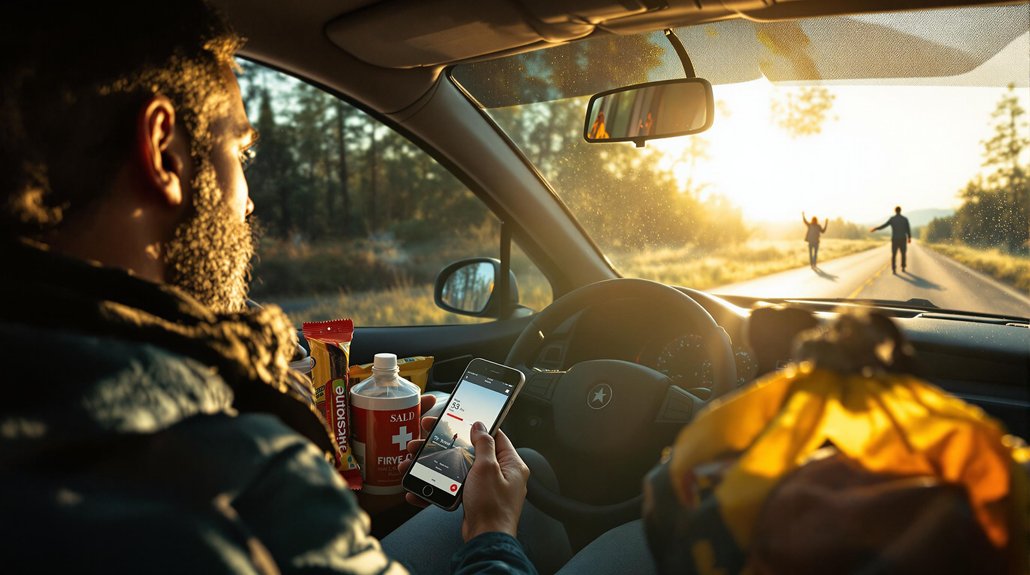
When you're in a tough situation with your car, knowing how to seek assistance can make all the difference. First, ensure you've prepared for emergencies by keeping key items in your car, such as water, non-perishable snacks, a flashlight with extra batteries, a first-aid kit, warm clothing, and a fully charged phone with a charger. These essentials can help you stay comfortable while waiting for help.
If your car breaks down, don't hesitate to call for roadside assistance. If you have a roadside protection membership or insurance coverage for this service, use it. You can either call directly or use a mobile app for faster service. When you call, provide clear details about your location and the nature of the problem. Staying calm during the call helps ensure you communicate effectively.
If you find yourself on a busy road, keep your doors locked and use your hazard lights to make your vehicle visible. Set up warning triangles or flares if you have them. Avoid accepting help from strangers, and wait for professional assistance to arrive. It's also a good idea to have a list of emergency contacts saved in your phone, so you can reach out to family or friends if necessary.
Frequently Asked Questions
How Can I Stay Entertained While Stranded in My Car?
To stay entertained while stranded, dive into reading materials you love or explore mobile games on your device. You'll keep your mind engaged and pass the time more easily while waiting for help.
What Should I Do if My Car Runs Out of Gas?
If your car runs out of gas, use emergency supplies to stay safe. Consider fuel alternatives like contacting roadside assistance or a friend. Stay with your car until help arrives, conserving energy and resources.
How Can I Safely Cook Food Inside My Car?
To safely cook food inside your car, use portable stoves instead of the engine. Prioritize food safety by keeping raw meats cold, avoiding contamination, and ensuring you monitor cooking temperatures closely for safe consumption.
What Are the Signs of Hypothermia to Watch For?
To recognize hypothermia symptoms, watch for shivering, numbness, and sluggishness. As body temperature drops, you might notice garbled speech and decreased consciousness. Stay alert to these signs to prevent severe complications.
How Can I Maintain Morale in a Survival Situation?
To maintain morale, you can use positive affirmations to uplift your spirits and practice creative journaling to express emotions. These activities foster a sense of control, helping you cope with challenges and build resilience.
Conclusion
In conclusion, being prepared can make a big difference if you find yourself stuck in your car for a long time. Keep your vehicle in good shape, pack essential supplies, and stay aware of your surroundings. Communicate effectively with others and know how to navigate challenges. Staying positive and sharing responsibilities can help you cope better. Remember, understanding local laws and seeking help when needed are important steps. With these tips, you can increase your chances of staying safe and comfortable.
