

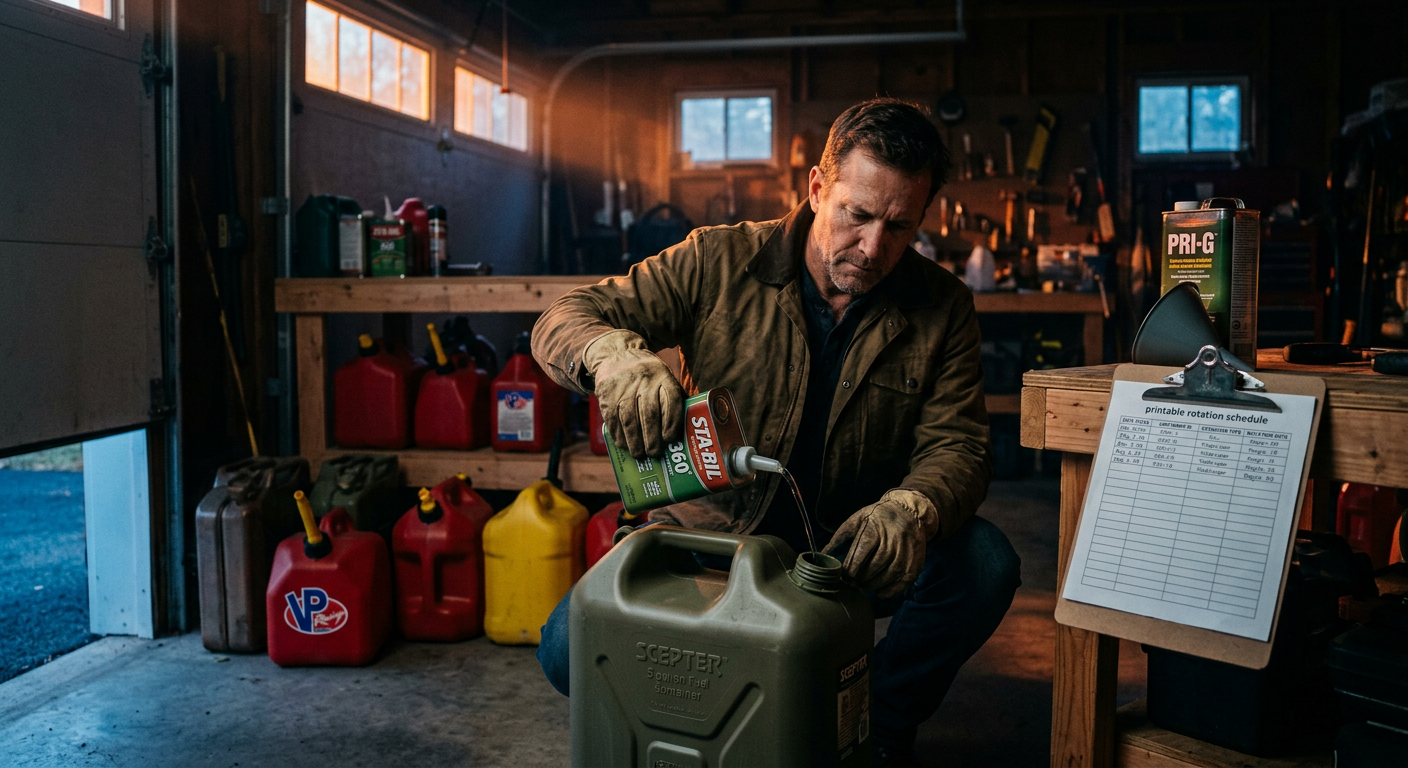
How to Store Gasoline Long Term: Containers, Stabilizers, and Rotation Schedules
For preppers, homesteaders, and anyone serious about emergency preparedness, understanding how to store gasoline long term is not just a convenience—it’s a critical component of self-reliance. Fuel powers generators, vehicles, chainsaws, and other essential equipment that can mean the difference between comfort and crisis during an extended grid-down scenario or natural disaster. However, gasoline is a volatile and perishable commodity, making proper storage a complex endeavor. This comprehensive guide will walk you through everything you need to know, from selecting the right containers and using effective stabilizers to implementing a robust rotation schedule and adhering to crucial safety protocols.
Related TacticalProof reading: How Long Do Water Tablets Last?
Why Preppers Need a Fuel Stockpile (and How Much Is Enough)
A reliable fuel stockpile is the lifeblood of an independent household in an emergency. Imagine a prolonged power outage after a hurricane, an ice storm, or even a widespread grid failure. Without fuel, your generator is a paperweight, your chainsaw can’t clear fallen trees, and your bug-out vehicle is stranded. Beyond immediate emergencies, a fuel reserve offers economic insulation against price spikes and supply chain disruptions.
Common Scenarios Requiring Stored Fuel:
- Power Outages: Generators provide electricity for refrigeration, heating/cooling, well pumps, and communication.
- Natural Disasters: Fuel for chainsaws to clear debris, vehicles for evacuation or supply runs, and generators for recovery efforts.
- Economic Instability: Protection against fuel shortages or hyperinflation.
- Remote Living: Ensuring access to fuel when local stations are distant or inaccessible.
Calculating Your Fuel Needs: A Practical Approach
Determining “how much is enough” depends entirely on your specific needs and anticipated scenarios. Start by inventorying all fuel-dependent equipment:
- Generators: Note their fuel consumption rate (e.g., 0.5-1 gallon per hour at half load). Estimate daily run time (e.g., 6-8 hours for critical systems).
- Vehicles: Consider your primary vehicle’s tank capacity and potential bug-out distance.
- Small Engines: Chainsaws, lawnmowers, ATVs, pressure washers – estimate their occasional use.
Example Calculation:
If your generator uses 0.75 gallons/hour and you plan to run it 8 hours a day for critical needs, that’s 6 gallons per day. For a 7-day emergency, you’d need 42 gallons. Add a full tank for your primary vehicle (e.g., 20 gallons) and 5-10 gallons for small engines. A reasonable starting goal might be 50-75 gallons for a typical family, aiming for 2-4 weeks of sustained operation. More ambitious preppers might aim for 3-6 months’ supply, which could easily exceed 200 gallons.
Remember, it’s always better to overestimate slightly than to run short. However, the amount you store must also align with legal limits and your ability to store it safely.
Approved Containers: Jerry Cans, Safety Cans, and Drum Storage Compared
The container you choose is paramount for safe and effective long term gas storage containers. Not all containers are created equal, and using the wrong one can lead to rapid fuel degradation, dangerous leaks, or even explosions. Always prioritize containers specifically designed and certified for gasoline storage.
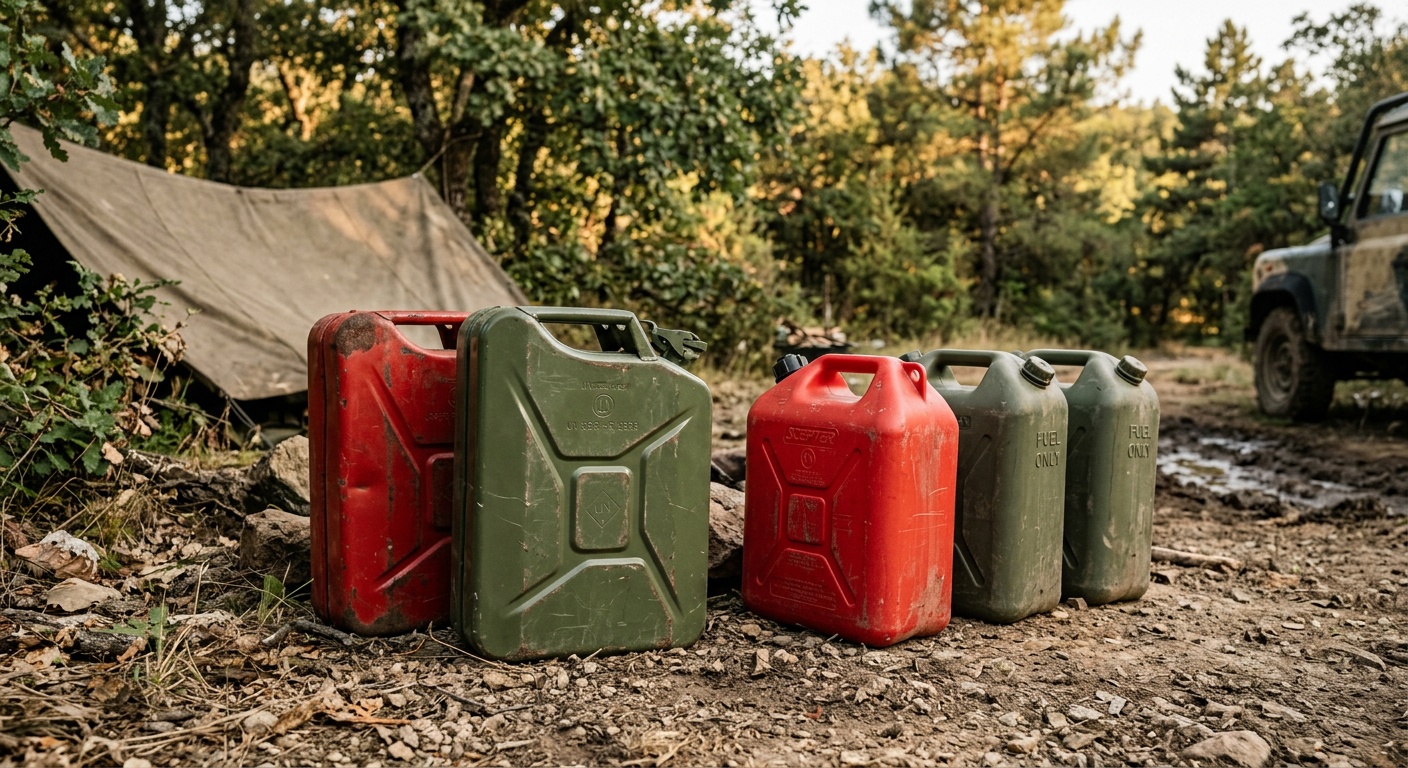
1. Jerry Cans (Plastic and Metal)
The iconic jerry can is a popular choice for its portability and durability.
-
Plastic Jerry Cans (HDPE):
- Pros: Lighter, rust-proof, often translucent for fuel level visibility. Many are CARB (California Air Resources Board) compliant, featuring self-venting spouts to reduce evaporative emissions.
- Cons: Can swell and contract with temperature changes, potentially leading to stress cracks over many years. Permeation (slow escape of fuel vapors) can occur, though modern HDPE cans are designed to minimize this.
- Certifications: Look for UL (Underwriters Laboratories) or ASTM (American Society for Testing and Materials) certifications, and CARB compliance if required in your region.
- Capacity: Typically 1-5 gallons.
-
Metal Jerry Cans (Steel):
- Pros: Extremely durable, puncture-resistant, less prone to permeation, and excellent for long-term storage due to their robust construction. Often feature an internal lining to prevent rust.
- Cons: Heavier, can rust if the internal lining is compromised or if stored in humid conditions without proper care. Can be more expensive.
- Certifications: Look for UN (United Nations) certification for transport of dangerous goods, and often meet specific military specifications (e.g., NATO standard).
- Capacity: Typically 5-20 liters (approx. 1.3-5.3 gallons).
Key Considerations for Jerry Cans: Ensure tight-sealing caps to prevent vapor escape and contamination. Store them out of direct sunlight to minimize temperature fluctuations.
2. Safety Cans (Type I and Type II)
Safety cans are engineered for maximum safety, especially in industrial or workshop environments, but are excellent for home storage too.
-
Features:
- Spring-Loaded Lid: Automatically closes to prevent spills and control vapors.
- Flame Arrestor: A mesh screen inside the spout prevents flashback ignition if a flame source is introduced.
- Pressure Relief: Vents automatically to relieve pressure buildup from temperature changes.
-
Type I vs. Type II:
- Type I: Single opening for both filling and pouring.
- Type II: Two openings – one for filling and one with a flexible metal hose for pouring, offering greater control and reducing spills.
- Materials: Typically galvanized steel with a durable powder-coat finish.
- Certifications: Always look for UL, FM (Factory Mutual), or ULC (Underwriters Laboratories of Canada) approval.
- Capacity: Commonly 1-5 gallons, but larger sizes up to 55 gallons are available for industrial use.
- Pros: Superior safety features, extremely durable, excellent for long-term storage.
- Cons: More expensive than standard jerry cans.
3. Drum Storage (55-Gallon Drums)
For those requiring substantial quantities of fuel, 55-gallon drums are an option, but they come with significant logistical and safety considerations.
- Materials: Steel drums are standard, often with internal linings.
- Pros: High volume storage, better bulk pricing on fuel.
- Cons: Extremely heavy when full (gasoline is ~6 lbs/gallon, so 330 lbs + drum weight), requiring specialized equipment (drum dollies, pumps) for handling and dispensing. Significant space requirement. Higher risk if not properly managed.
- Safety: Requires a dedicated, well-ventilated, fire-resistant storage area. Proper grounding and bonding are critical during transfer to prevent static discharge.
- Certifications: UN-rated drums are essential.
General Container Best Practices:
- Labeling: Clearly label each container with the fuel type, date of purchase, and date stabilizer was added.
- Airspace: Leave a small amount of airspace (about 5%) to allow for thermal expansion.
- Storage Location: Store in a cool, dry, well-ventilated area away from ignition sources and direct sunlight.
Fuel Stabilizers Explained: STA-BIL vs PRI-G vs SeaFoam
Even in the best containers, gasoline will degrade over time. Oxidation, gum formation, and phase separation are common issues that can turn your valuable fuel into unusable sludge. This is where a quality fuel stabilizer for gas storage becomes indispensable. Stabilizers work by preventing these chemical reactions, extending the shelf life of gasoline significantly.
How Gasoline Degrades
Gasoline is a complex blend of hydrocarbons. Over time, it undergoes several degradation processes:
- Oxidation: Exposure to oxygen causes hydrocarbons to break down, forming gums, varnishes, and sludge that can clog fuel lines and carburetors.
- Evaporation: Lighter hydrocarbons evaporate, reducing the fuel’s octane rating and making it harder to ignite.
- Water Absorption (Ethanol Blends): Ethanol is hygroscopic, meaning it attracts and absorbs water. When too much water is absorbed, the ethanol and water can separate from the gasoline (phase separation), forming a corrosive layer at the bottom of the tank.
Popular Fuel Stabilizers Compared
While many products exist, three stand out for their effectiveness in long-term storage:
1. STA-BIL (Red Formula)
- Mechanism: Primarily an antioxidant that prevents gum and varnish formation. It also contains corrosion inhibitors.
- Ethanol Protection: The standard red STA-BIL does not directly prevent phase separation in ethanol-blended fuels, though it does protect against the effects of oxidation. STA-BIL Marine (blue) and STA-BIL 360 Protection are specifically formulated for ethanol protection.
- Claimed Shelf Life: Up to 12-24 months.
- Application: Add to fresh fuel before storage. Run the engine for a few minutes to circulate the treated fuel throughout the system.
- Best For: General gasoline storage, small engines, and vehicles that will be stored for less than two years.
2. PRI-G
- Mechanism: A commercial-grade fuel treatment that not only stabilizes fuel but also reconditions old fuel by dissolving sludge and preventing new deposits. It’s a powerful antioxidant and dispersant.
- Ethanol Protection: PRI-G is highly effective against ethanol-related issues, including phase separation, by keeping water dispersed in fine droplets that can be burned off.
- Claimed Shelf Life: Up to 2-3 years, with some users reporting success beyond 5 years when properly applied.
- Application: Can be added to fresh fuel for preventative maintenance or to older, degraded fuel for reconditioning.
- Best For: Serious long-term fuel storage (2+ years), especially for larger quantities and critical applications where maximum shelf life is desired.
3. SeaFoam Motor Treatment
- Mechanism: A multi-purpose product that acts as a fuel stabilizer, cleaner, and lubricant. It works to liquefy gum and varnish deposits, clean fuel injectors and carburetors, and lubricate upper cylinders.
- Ethanol Protection: Helps to control moisture and prevent corrosion, offering some protection against ethanol’s negative effects, though not as directly focused on phase separation prevention as PRI-G.
- Claimed Shelf Life: Up to 2 years.
- Application: Can be added to fuel tanks, crankcases, or directly into carburetor throats/intake manifolds.
- Best For: General fuel stabilization, especially for engines that might sit for extended periods but are still occasionally used, and for cleaning fuel systems.
Important Tip: Always follow the manufacturer’s instructions for dosage and application. Adding too little stabilizer will be ineffective, and adding too much can sometimes cause issues, though most stabilizers are forgiving.
Step-by-Step Rotation Schedule to Keep Your Fuel Fresh
Even with the best stabilizers, a robust rotation schedule is the ultimate safeguard against fuel degradation. Think of stabilizers as extending the grace period, but rotation ensures you’re always using relatively fresh fuel. This is a cornerstone of effective prepper fuel storage.
The ‘First In, First Out’ (FIFO) Principle
This is the golden rule for any stored commodity, including fuel. The oldest fuel should always be used first.
Recommended Rotation Schedule:
-
Initial Setup (Month 0):
- Purchase fresh gasoline (preferably non-ethanol if available, or E10 if not).
- Immediately add the recommended amount of your chosen fuel stabilizer (e.g., PRI-G for 2+ years, STA-BIL for 1 year).
- Fill your approved storage containers, leaving about 5% airspace.
- Label each container clearly with the date of stabilization and the expected expiration date.
- Store in a cool, dark, well-ventilated area.
-
Quarterly Check-In (Every 3 Months):
- Visually inspect containers for leaks, swelling, or damage.
- Check labels for legibility.
- If possible, gently agitate containers to mix the fuel and stabilizer, especially if they’ve been sitting undisturbed.
-
Annual Rotation (Every 6-12 Months, depending on stabilizer):
- Identify the oldest fuel in your stockpile.
- Use this fuel in your vehicles, lawnmowers, or other daily-use equipment. This is where your bug-out vehicle or daily driver becomes part of your rotation system.
- As you use the old fuel, refill the empty storage containers with fresh gasoline, immediately adding stabilizer and dating them.
- Example: If you have 50 gallons stored, use 10-15 gallons every 6 months and replace it with fresh, stabilized fuel. This ensures a constant supply of relatively fresh fuel.
-
Generator Exercise (Monthly/Quarterly):
- Run your generator for 30-60 minutes under a light load (e.g., a few lights, a fan). This circulates the stabilized fuel through the engine and keeps seals lubricated.
- Use fuel from your oldest stored supply for this purpose.
Signs of Degraded Fuel:
- Color Change: Fresh gasoline is light yellow/clear. Degraded fuel often turns darker, amber, or even brown.
- Odor: A sour, varnish-like, or unusually strong chemical smell indicates degradation.
- Sediment: Visible particles or sludge at the bottom of the container.
- Engine Performance: Hard starting, rough idling, loss of power, or stalling when using the fuel.
If fuel shows significant signs of degradation, it should not be used in sensitive engines. It may be possible to filter it for less critical uses or dispose of it properly at a hazardous waste facility.
Legal Limits: How Much Gasoline Can You Store at Home by Code
While building a substantial fuel reserve is prudent, it’s crucial to be aware of and adhere to local, state, and federal regulations regarding the storage of flammable liquids. These codes are in place for public safety and vary significantly by jurisdiction.
General Guidelines and Common Limits:
- NFPA 30A (National Fire Protection Association): This is a widely adopted standard. For residential properties, NFPA 30A typically limits the storage of Class I flammable liquids (like gasoline) to no more than 25 gallons in approved containers outside of a dwelling. Inside a dwelling, the limit is often 10 gallons, but this is generally discouraged for safety reasons.
- Local Fire Codes: Your municipal fire department or building code enforcement office will have specific regulations that may be stricter than national guidelines. These often dictate:
- Maximum total quantity allowed.
- Maximum container size (e.g., no more than 5-gallon containers).
- Required distance from ignition sources, property lines, and habitable structures.
- Ventilation requirements for storage areas.
- Insurance Policies: Your homeowner’s insurance policy may have clauses regarding the storage of flammable materials. Exceeding these limits could void your coverage in case of an incident.
- Rural vs. Urban: Rural areas often have more lenient codes than densely populated urban or suburban areas due to lower population density and greater distances between structures.
Actionable Advice:
- Contact Your Local Fire Department: This is the most reliable source for accurate information on local storage limits and requirements. Ask about residential storage of gasoline and any specific container or location restrictions.
- Check Your Homeowner’s Insurance: Review your policy or contact your agent to understand any limitations or requirements related to fuel storage.
- Err on the Side of Caution: If you’re unsure, store less than the maximum or invest in more robust, fire-rated storage solutions if you need to exceed common limits.
Exceeding legal limits can result in fines, forced removal of fuel, or, more critically, put you and your property at undue risk. Always prioritize safety and compliance.
Diesel vs Gasoline vs Kerosene: Which Stores Longest
When considering prepper fuel storage, it’s important to understand the inherent differences in shelf life between various fuel types. Not all fuels are created equal in terms of their long-term stability.
Gasoline (Petrol)
- Composition: A highly refined blend of volatile hydrocarbons, designed for high octane and rapid combustion.
- Shelf Life (Untreated): Typically 3-6 months.
- Shelf Life (Treated with Stabilizer): 1-3 years, potentially longer with premium stabilizers and ideal conditions.
- Degradation Issues: Highly susceptible to oxidation, evaporation of volatile components, and phase separation (especially with ethanol blends). Forms gums, varnishes, and water contamination.
- Storage Considerations: Requires airtight, approved containers, fuel stabilizer, and cool, dark storage.
Diesel Fuel
- Composition: Heavier, less volatile hydrocarbons than gasoline, designed for compression-ignition engines.
- Shelf Life (Untreated): 6-12 months.
- Shelf Life (Treated with Stabilizer/Biocide): 2-5 years, potentially longer.
- Degradation Issues: Less prone to evaporation and oxidation than gasoline, but susceptible to:
- Microbial Growth: Bacteria, fungi, and algae can grow in diesel, especially with water contamination, forming sludge that clogs filters.
- Oxidation: Still occurs, forming sediments and darkening the fuel.
- Waxing: At very low temperatures, paraffin wax in diesel can crystallize, gelling the fuel.
- Storage Considerations: Requires approved containers, a diesel fuel stabilizer (often includes a biocide), and cool, dark storage. Regular testing for microbial contamination is recommended for very long-term storage.
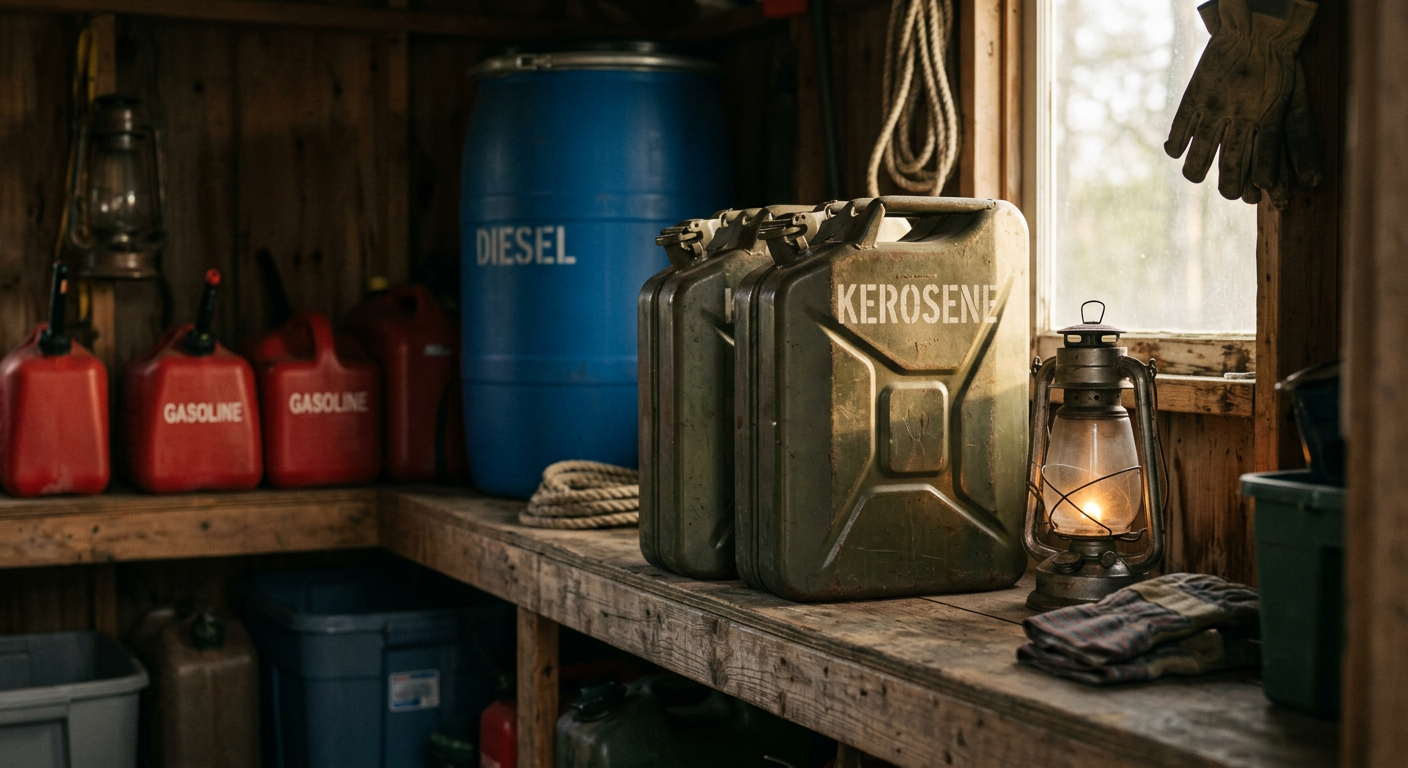
Kerosene
- Composition: A middle distillate fuel, heavier than gasoline but lighter than diesel. Used for heating, lighting, and some jet engines.
- Shelf Life (Untreated): 5-10 years, potentially longer.
- Shelf Life (Treated): Can extend shelf life further, though less critical than for gasoline or diesel.
- Degradation Issues: Very stable. Primarily susceptible to oxidation over many years, leading to darkening and slight gum formation. Microbial growth is less common than in diesel but can occur with significant water contamination.
- Storage Considerations: Approved containers, cool, dark storage. A general fuel stabilizer can be used, but its impact on shelf life is less dramatic than for other fuels.
Conclusion on Shelf Life:
Kerosene generally stores the longest due to its less volatile and more stable chemical composition. Diesel is next, especially when treated with biocides and stabilizers. Gasoline has the shortest natural shelf life and requires the most diligent stabilization and rotation.
For a diverse preparedness plan, consider storing a mix of fuels if your equipment allows. Kerosene for heating and lighting, diesel for heavy equipment, and gasoline for generators and vehicles.
Safety Protocols: Ventilation, Grounding, and Fire Suppression
Storing gasoline, regardless of quantity, introduces inherent risks. Adhering to strict safety protocols is non-negotiable to prevent accidents, fires, and health hazards. Your primary goal is to minimize ignition sources, control vapors, and be prepared for the worst.
1. Ventilation
Gasoline vapors are heavier than air and can travel along the ground to an ignition source. They are also highly flammable and explosive in certain concentrations.
- Outdoor Storage: Ideal. Store containers in a detached shed, garage, or dedicated fuel storage locker. Ensure the area is well-ventilated, preferably with natural cross-ventilation.
- Indoor Storage (Not Recommended for Large Quantities): If absolutely necessary for small quantities (within legal limits), store in a dedicated, fire-rated cabinet designed for flammables. The area must have active mechanical ventilation that exhausts to the outside, not into other parts of the building.
- Avoid Basements: Never store gasoline in basements. Vapors can accumulate, creating an extreme fire and explosion hazard.
- Distance: Store fuel at least 50 feet away from ignition sources (water heaters, furnaces, electrical panels, open flames, pilot lights) and habitable structures.
2. Grounding and Bonding
Static electricity is a silent killer when transferring flammable liquids. The friction of fuel flowing can generate a static charge that, if not dissipated, can spark and ignite vapors.
- Grounding: Connect the storage container (e.g., a 55-gallon drum) to an earth ground (e.g., a metal stake driven into the ground, or a cold-water pipe).
- Bonding: Connect the two containers involved in the transfer (e.g., the drum and the jerry can being filled) with a bonding wire. This equalizes the electrical potential between them, preventing a spark.
- Procedure: Always connect grounding and bonding wires BEFORE opening containers or starting the transfer. Disconnect them AFTER the transfer is complete and containers are sealed.
- No Plastic Funnels: Avoid plastic funnels when transferring fuel, as they can generate static. Use metal funnels that can be bonded.
3. Fire Suppression
Despite all precautions, accidents can happen. Being prepared to suppress a fuel fire quickly is vital.
- Fire Extinguishers: Keep at least one ABC-rated fire extinguisher (suitable for Class B flammable liquid fires) readily accessible near your fuel storage area. Ensure it is regularly inspected and charged. A 10 lb extinguisher is a good minimum for fuel storage.
- Sand/Dirt: For small spills or contained fires, sand or dirt can be used to smother flames. Keep a bucket of sand nearby.
- No Water: Never use water on a gasoline fire. Gasoline floats on water, and applying water will only spread the burning fuel, making the fire worse.
- Spill Kits: Have absorbent pads or granular absorbents on hand to quickly contain and clean up small spills.
- Emergency Plan: Have an evacuation plan for your family and know how to call emergency services.
4. Personal Protective Equipment (PPE)
- Gloves: Chemical-resistant gloves (nitrile or neoprene) to protect skin from fuel exposure.
- Eye Protection: Safety glasses or goggles to prevent splashes.
- Respirator: If working in an enclosed space or with significant vapor exposure, a respirator with organic vapor cartridges is recommended.
5. General Safety Rules
- No Smoking/Open Flames: Absolutely no smoking, welding, grinding, or any other ignition source near fuel storage or transfer areas.
- Children and Pets: Keep fuel storage areas locked and inaccessible to children and pets.
- Spill Management: Clean up spills immediately. Ventilate the area thoroughly.
- Never Siphon by Mouth: Use a proper fuel pump or siphon.
- Proper Disposal: Dispose of old, degraded fuel or contaminated absorbents at an approved hazardous waste facility.
By diligently following these safety protocols, you can significantly mitigate the risks associated with long-term gasoline storage, ensuring your preparedness efforts don’t inadvertently create a new hazard.
Frequently Asked Questions About Long-Term Gasoline Storage
Q: Can I store gasoline in my car’s fuel tank long-term?
A: While your car’s fuel tank is designed for gasoline, it’s not ideal for very long-term storage (beyond 6-12 months without driving). The tank isn’t perfectly sealed, and fuel can still degrade. For vehicles stored for extended periods, it’s best to fill the tank completely (to minimize air space), add a quality fuel stabilizer, and ideally, run the engine for a few minutes to circulate the treated fuel.
Q: What happens if I use old, unstabilized gasoline?
A: Using old, unstabilized gasoline can lead to several problems: hard starting, rough idling, reduced engine performance, and potential damage to fuel system components. Degraded fuel can clog fuel filters, carburetors, and injectors with varnish and gum deposits. In severe cases, it can cause engine failure. It’s always best to err on the side of caution and dispose of significantly degraded fuel.
Q: Is non-ethanol gasoline better for long-term storage?
A: Yes, absolutely. Non-ethanol gasoline (often labeled E0) is generally superior for long-term storage because it does not suffer from phase separation, which is a major issue with ethanol-blended fuels. Ethanol attracts and absorbs water, and when saturated, it separates from the gasoline, forming a corrosive layer. If you have access to non-ethanol gasoline, it’s the preferred choice for your fuel stockpile, even if you still use a stabilizer.
Q: How often should I rotate my stored gasoline?
A: The frequency of rotation depends on the quality of your fuel stabilizer and storage conditions. With a good stabilizer like PRI-G, you might extend rotation to 1-2 years. For standard stabilizers like STA-BIL, an annual rotation is recommended. The ‘First In, First Out’ principle is key: use your oldest fuel first and replace it with fresh, stabilized fuel to maintain a consistently viable supply.
Q: Can I mix different brands of fuel stabilizers?
A: It’s generally not recommended to mix different brands or types of fuel stabilizers. Each product has a specific chemical formulation designed to work optimally on its own. Mixing them could potentially lead to unforeseen chemical reactions, reduce their effectiveness, or even create undesirable byproducts. Stick to one trusted brand and follow its instructions for best results.
