


Yes, wet flint can still spark effectively. The physical integrity of flint is unaffected by moisture, so you can use it even in damp conditions. When striking flint against steel or another hard surface, it produces sparks whether it's wet or dry. However, if you're trying to start a fire, your tinder and kindling need to be dry. Seek out sheltered areas to find dry materials, as high humidity can complicate fire starting. Remember, preparation is key in such situations. You'll find more tips on how to manage fire starting challenges in various environments.
Understanding Flint Properties
Understanding the properties of flint is essential if you're exploring its uses, especially in fire-starting and tool-making. Flint has unique characteristics that make it an excellent material for these purposes. For starters, it rates a hardness of 7 on the Mohs scale, which means it's quite tough and resistant to wear. This durability is one reason ancient people favored flint for crafting tools.
When you consider flint composition, it's primarily made up of microcrystalline quartz, specifically silicon dioxide (SiO2). This composition gives flint its dense structure, formed through silica deposition interacting with calcium carbonate in sediments. As you examine flint, you'll notice its typical opaque appearance, though thin edges can be translucent. The conchoidal fracture pattern allows you to create smooth, sharp edges when knapping, making it ideal for tool-making.
Another important aspect of flint characteristics is its ability to produce sparks. When you strike flint against a high-carbon steel surface, it generates sparks, which can ignite tinder for fire-starting. The texture of flint is also fine-grained and homogeneous, which aids in precision when shaping tools. Additionally, color variations ranging from black to gray and brown can occur due to impurities, impacting its aesthetic appeal. Moreover, Ohio flint is particularly valued for its beautiful coloring, making it a popular choice for jewelry. Interestingly, hardened steel enhances spark production, which is crucial for effective fire-starting using flint.
Impact of Moisture on Flint
Moisture doesn't diminish flint's ability to spark when struck against steel, making it a reliable choice for fire starting even in damp conditions. You can confidently use flint in wet weather, as its spark reliability remains unchanged. Here are some key points regarding the impact of moisture on flint:
- Spark production unaffected: Flint will produce sparks regardless of being wet; moisture effects don't hinder its performance.
- Physical integrity preserved: The flint itself isn't damaged by moisture, meaning it stays usable even in challenging environments. Repeated phrases prompt physical participation, which can be beneficial when demonstrating fire-starting techniques.
- Tinder's role: While flint can create sparks, the dryness of your tinder is crucial for ignition. If your tinder's wet, it might not catch fire, no matter how well you strike the flint.
- Weather considerations: Rain or high humidity mainly complicate fire starting due to the condition of your tinder, not the flint. Flint remains effective even when wet, unlike matches, which can be a critical advantage in survival situations.
In essence, while flint can maintain its spark production in wet conditions, you need to ensure your tinder is dry for successful fire starting. This understanding is vital for outdoor enthusiasts and survivalists alike, as it highlights the importance of both materials in your fire-starting kit. Remember, flint's effectiveness is consistent, making it a trusted tool for fire-making, even when the weather isn't cooperating.
How to Start a Fire
Starting a fire can be a straightforward process if you have the right materials and follow a few simple steps. First, clear an area on the ground by removing any grass or leaves. This space should be circular and free of flammable materials. Next, line the perimeter with large rocks to contain the fire and help with fire maintenance. Creating a fire barrier is essential to ensure that the fire remains controlled and does not spread.
Now, build your kindling by placing dry sticks and twigs in the center. These will serve as the base for your fire. On top of the kindling, add dry grass and leaves, which act as tinder to catch the initial spark. Once your setup is ready, it's time to light the fire. Use a lighter or matches if you have them. If you're relying on primitive methods, flint and steel or a knife can create sparks to ignite your tinder. Understanding that flint and steel can produce sparks even when wet is crucial for successful fire-starting in challenging conditions.
Troubleshooting Fire Ignition
Troubleshooting fire ignition requires attention to detail and a few essential techniques. Whether you're using flint as your fire starter or looking for other ignition sources, understanding these steps can help you succeed.
- Check Your Materials: Make sure your wood and kindling are dry. Wet materials are harder to ignite and can dampen your chances of success.
- Control Airflow: Ensure there's adequate airflow around your fire area. Good airflow helps keep your embers alive and prevents them from being extinguished too quickly.
- Use Sufficient Flint Shavings: Don't skimp on flint shavings when trying to create sparks. The more shavings you have, the better your chances of catching a spark. Additionally, understanding how fire behavior interacts with your ignition materials can enhance your chances of success. Wet flint may hinder spark production due to its inability to generate effective friction.
- Mind the Wind: Protect your fire area from excessive wind. Wind can blow out your sparks and make it challenging to ignite your tinder.
Position the flint at an appropriate angle so that sparks fall directly into your tinder. Always remember to prepare your tinder well, possibly using charred powder or cloth to retain those precious sparks. If you find yourself struggling, gently blow on the sparks to encourage ignition. Each of these techniques is crucial for troubleshooting fire ignition effectively, so take the time to apply them properly. With patience and attention to detail, you'll be well on your way to starting a successful fire.
Alternative Fire Starting Techniques
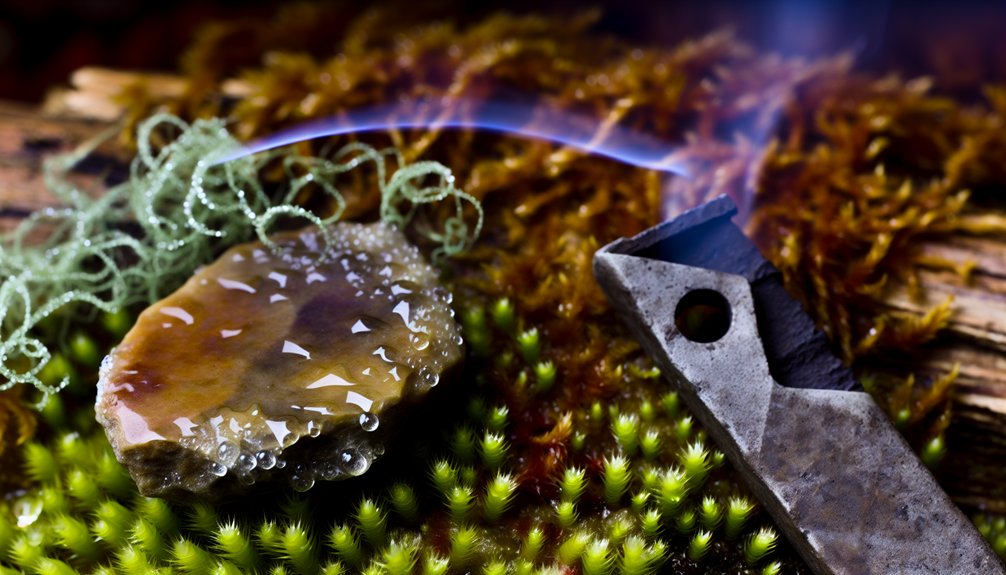
When you're in a pinch and need to ignite a fire, exploring alternative fire starting techniques can expand your options significantly. One effective method is the flint and steel technique. You'll need a piece of flint and carbon steel. When you strike the steel against the flint, it creates sparks. Direct those sparks onto your tinder or char cloth, then gently blow on them to help ignite the material. Remember, practice is key to mastering this fire starter type.
Friction methods, like the hand drill and bow drill, are also popular. These techniques generate heat through friction between two pieces of wood. With the right materials and technique, you can produce a glowing ember that ignites your tinder, especially when using a notch in the fireboard. Mastery of these techniques is essential for success.
If you have sunlight, consider solar fire starting. This method uses a magnifying glass, clear water bottle, or plastic bag to concentrate sunlight onto a small area. With enough heat, you can ignite your tinder, but it requires favorable weather conditions.
Lastly, the fire piston technique involves a piston and cylinder. By quickly slamming the piston, you compress air, creating heat and pressure that can ignite char cloth or other ignition materials. This method requires specific components, including the piston, cylinder, lubricant, and tinder.
Essential Materials for Fire Starting
Gathering the right materials is crucial for successfully starting a fire. Knowing the essential tinder types, kindling sources, and fuel options will help you ignite a fire quickly and efficiently. Here's what you need to gather:
- Tinder Types: Look for dry leaves or pine needles that are firm and "crackly." You can also use dry shredded wood, deconstructed cattail, or char cloth. Cotton balls covered in Vaseline are excellent, too; just make sure they're well-saturated.
- Kindling Sources: You'll need small twigs, about the size of a #2 pencil or smaller. Dry branches from dead trees work well, as do small dry sticks from the base of pine trees. Also, consider dry grass and dead wood pieces that are roughly the diameter of a thumb.
- Fuel Materials: As your fire grows, larger logs from dead trees are important. Look for thicker branches and dry wood pieces that are larger than thumb-sized but smaller than full logs.
- Fire Starting Tools: You'll want a reliable flint, steel (like a pocketknife or fire steel), and possibly a fire piston. A magnifying glass can help focus sunlight, and matches or a lighter can ignite your tinder directly.
Wet Conditions and Fire Success

Even with the right materials, wet conditions can make starting a fire challenging. To increase your chances of success, you'll need to focus on fire location, ignition methods, and effective building techniques. Here are some essential tips:
- Choose a Protected Location: Find a spot sheltered from rain and wind, like under a large rock or fallen tree.
- Gather Dry Materials: Look for dry tinder and kindling in sheltered areas to ensure you have the best chance for ignition.
- Create a Fire Bed: Use dry rocks or logs to lift your fire off the wet ground.
- Use Effective Ignition Methods: Waterproof matches or fire starter sticks can be reliable options for igniting your fire.
Here's a quick reference table for building your fire:
| Step | Description |
|---|---|
| Build Structure | Use a teepee or log cabin design for airflow. |
| Shield the Fire | Protect your flame with a tarp or shelter. |
| Manage the Flame | Adjust wood placement to control size and direction. |
| Monitor Regularly | Check the fire's condition for safety and efficiency. |
Frequently Asked Questions
Can Flint Be Effective in Humid Environments?
Flint can struggle in humid environments due to humidity effects on tinder and moisture absorption. Proper flint storage helps maintain effectiveness, but ensuring your materials are dry is crucial for successful fire starting.
What Happens if My Flint Gets Wet?
If your flint gets wet, don't worry; its properties remain intact. Use flint drying techniques like air drying or sunlight exposure to ensure maximum effectiveness when you need to strike a spark later.
Is There a Difference Between Dry and Wet Flint?
There's a noticeable difference between dry flint and wet flint in spark generation. Dry flint performs better, allowing for more effective sparks, while wet flint can challenge your fire-starting efforts without proper technique and tinder preparation.
How Does Temperature Affect Flint's Sparking Ability?
Temperature doesn't significantly affect flint's sparking efficiency. Instead, the oxidation of steel generates sparks. Focus on using high carbon content steel and ensuring fine tinder to maximize your success in creating fire, regardless of temperature.
Can Flint Be Used After Prolonged Exposure to Water?
Yes, you can use flint after prolonged water exposure. Its wet flint properties remain effective for sparking. Just remember flint maintenance tips, like keeping the edge sharp, to ensure optimal performance when striking.
Conclusion
In conclusion, while wet flint can be challenging to use, it can still spark if you know the right techniques. If you find yourself in a damp situation, remember to dry your flint as much as possible and use a good kindling material. If flint doesn't work, don't hesitate to explore other fire-starting methods. Always be prepared with essential materials, and you'll increase your chances of successfully starting a fire, even in wet conditions.
