
To treat a burn in the wild, first extinguish the source of the burn. Cool the burn under running water for 10-20 minutes—don't use ice, as it can cause more damage. Cover the area with a sterile, non-adhesive bandage or cloth. Keep the burn clean and dry to prevent infection, changing the dressing frequently. For pain relief, take over-the-counter medication like ibuprofen. Monitor for signs of infection or severe symptoms. If the burn is larger than 10% of the body or near the airway, seek medical help immediately. You might find useful tips on additional treatments and prevention strategies.
Initial Response to Burns
When you encounter a burn in the wild, your first priority is to extinguish the source of the burn. Immediately stop the fire or remove contact with any hot liquids or materials. If the person is on fire, help them use the "Stop, Drop, and Roll" technique to smother the flames. Once the flames are out, check for any smoldering material on their clothing and carefully remove it. If clothing is stuck, cut or tear around it to prevent further injury.
Next, you'll want to cool the burn. Run cool water over the affected area for about 10 to 15 minutes. If running water isn't available, cool, clean compresses can work as an alternative. Avoid using ice, ointments, or oils, as these can worsen the injury. First-degree burns often result from sun exposure, so be vigilant about protecting the skin from the sun while in the wild. It's important to note that the severity of the burn can significantly affect how you should proceed with treatment.
After cooling the burn, it's essential to protect it. Cover the burn with a sterile, non-adhesive bandage or clean cloth to keep it clean and reduce pain. If you have emergency supplies with antibiotic ointment, apply it only after the burn has been cleaned and cooled.
Finally, if the burn is severe or shows signs of infection, seek medical help immediately. Evacuate the person if necessary, especially for burns covering large areas or affecting sensitive parts of the body. Being prepared with emergency supplies can make all the difference in effectively responding to a burn in the wild. Always prioritize burn prevention, keeping potential hazards at a safe distance.
Understanding Burn Severity
How can you effectively assess the severity of a burn? Understanding burn classification is essential for providing the right treatment. Burns are generally categorized into three types: first-degree, second-degree, and third-degree. Each type has distinct characteristics that help you evaluate the extent of the injury.
Here's a simple overview of burn classifications:
| Burn Type | Description |
|---|---|
| First-Degree | Affects only the outer skin layer. |
| Second-Degree | Involves the outer and underlying layers. |
| Third-Degree | Extends through all skin layers. |
| Minor | Limited area, mostly first-degree burns. |
| Severe | Third-degree burns or extensive second-degree burns. |
To assess a burn accurately, you can use various assessment tools. The American Burn Association provides criteria to determine whether a burn is minor, moderate, or severe. You should also consider the rule of nines to estimate the burn size. This method divides the body into sections, helping you gauge how much area is affected. It's important to note that fire severity influences post-burn recovery and can impact the treatment approach. First-degree burns often heal more quickly and usually do not require extensive medical attention, making them less of a concern in wilderness settings.
Evaluate the depth of the burn, the age of the patient, and if there are other injuries present. Pay special attention to sensitive areas like the hands, feet, face, and genitalia. By understanding these classifications and using assessment tools effectively, you can better determine the necessary steps for treatment in the wild.
Field Treatment Techniques
Field treatment techniques for burns in the wild require quick and decisive action to minimize damage and promote healing. Start by extinguishing the source of the burn. Make sure the person stops moving, drops, and rolls to put out any flames. After that, assess the severity of the burn. Is it superficial, partial-thickness, or full-thickness? Ensure there are no lingering hazards, such as stoves or hot pots.
Next, cool the burn using cool, clean water. Avoid ice water, as it can cause more harm. Gently wash the area to prevent infection, and then apply a moist dressing for small burns or a dry dressing for larger ones. Don't break any blisters, as they protect the wound. If a blister does rupture, clean it and cover it with a dry dressing.
Pain management is also crucial. Use over-the-counter medications like ibuprofen or acetaminophen. Keep the victim hydrated to prevent dehydration and shock. If the burn covers more than 10% of the body, or involves sensitive areas like the face or hands, be ready to evacuate. Additionally, monitor for additional injuries that may require attention, as they can complicate the burn treatment process. It is essential to use protective gear when handling hot equipment to prevent further injury.
Regularly check the dressings and change them to keep the wound clean. If you notice signs of shock, keep the victim warm and calm, lying down with elevated legs. Always monitor for airway involvement if the face is burned. Evacuate as soon as possible for professional medical care. These first aid steps can make a difference in effective wound care.
Alternative Treatment Options
Exploring alternative treatment options for burns in the wild can be incredibly beneficial, especially when traditional medical care isn't immediately available. Herbal remedies offer a variety of solutions to help soothe and heal burns. One of the most effective is aloe vera. Apply a layer of pure aloe vera gel directly to the burn to promote healing and reduce inflammation. You can use it three to four times daily as needed.
Calendula is another great option. You can use it as an ointment or make a tea by steeping 1 teaspoon of dried flowers in boiling water for 15 minutes. Once cooled, apply it topically to the burn. Just remember to test a small area of your skin first for any allergic reactions.
Gotu kola cream, containing 1% of the herb, may help repair skin tissue and promote healing. Honey can also aid in healing due to its antibacterial properties, but it might not be practical in wilderness settings. Apply a thin layer to the burn if you have it available.
In addition to these herbal remedies, natural antiseptics like cool water can help clean the burn and relieve pain. According to studies, applying antioxidant-rich foods can significantly enhance the healing process of burns, making their inclusion in your diet beneficial. Always avoid direct sunlight on the burned area, and don't pop any blisters to reduce the risk of infection. First-degree burns are characterized by mild pain and redness, making home remedies particularly effective for managing them. By using these alternative treatments, you can manage burns more effectively until professional medical care is accessible.
Complications and Monitoring
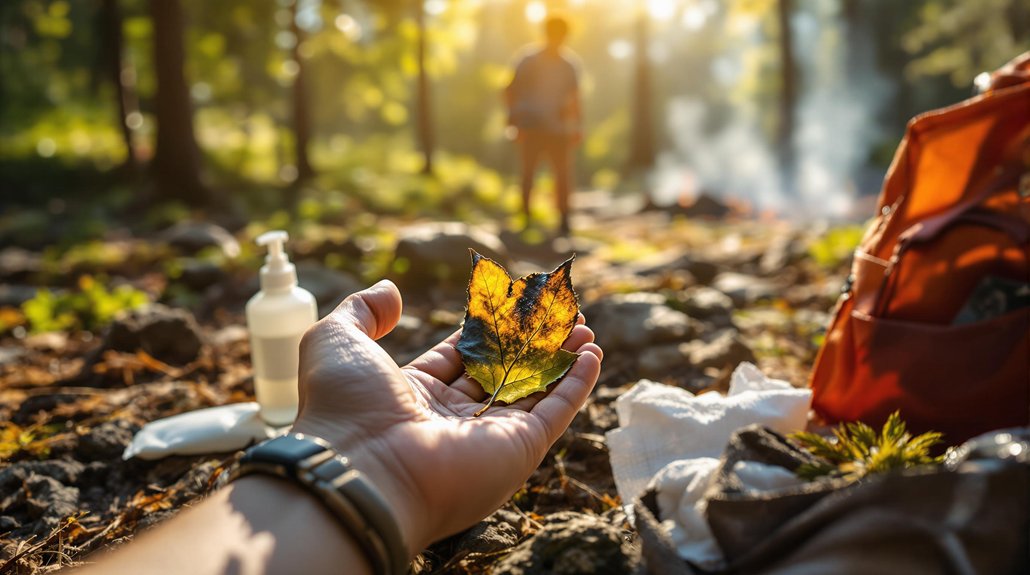
Burns can lead to serious complications if not properly monitored and treated. Infection prevention is vital because burns can easily become infected, leading to conditions like cellulitis, which shows up as red, swollen skin around the burn. You should keep the burn clean and covered to minimize this risk. Regular wound assessment is essential; check for visual signs like increased redness, swelling, or pus. If you notice a foul odor, that's a clear warning sign of infection.
Be aware that severe burns can cause shock, heat exhaustion, and even heatstroke. Monitor for systemic symptoms, such as fever and malaise, which could indicate an underlying infection. If the burn is deep or widespread, you also need to watch for fluid loss and low blood volume. Regular dressing changes help keep the wound clean and reduce infection risk. Additionally, ensure you know the common causes of burns, as this knowledge can help you avoid similar incidents in the future.
Use the American Burn Association's criteria to assess the severity of the burn. This will help you determine if it's minor, moderate, or severe, guiding your treatment decisions. The rule of nines can assist you in estimating the burn size in adults. Always keep an eye on the burn's depth and extent, as this can change over time.
If you notice any signs of complications, such as increased pain or discoloration of the skin, seek medical attention. By staying vigilant and taking these steps, you can effectively monitor and manage a burn in the wild. Remember, the risk of infection increases significantly with deeper burns, necessitating more careful observation and intervention.
Special Considerations for Burns
When dealing with burns in the wild, there are specific considerations that can significantly impact treatment and outcomes. Understanding these factors can aid in both burn prevention and burn recovery, ensuring you're prepared for any situation.
- Assess the Burn: Quickly evaluate the burn's depth and size. Knowing if it's superficial, partial-thickness, or full-thickness helps determine your next steps. Also, check for burns on critical areas like the face or hands.
- Evacuate if Necessary: If you suspect airway burns or if the burn covers more than 10% of the body, consider immediate evacuation. This is vital for more severe cases.
- Cool the Burn: Always cool the burn with cold running water for at least 20 minutes. This can reduce pain and limit damage. Avoid ice, as it can worsen the injury.
- Use Protective Gear: When managing burns, wearing gloves is essential. This helps prevent infection and provides an extra layer of safety while treating the injured area.
Frequently Asked Questions
What Should I Do if I Can't Access Water to Cool the Burn?
If you can't access water, use natural alternatives like cling film to cover the burn. This acts as a barrier until you can get help. Remember, it's crucial for emergency first aid to minimize infection risk.
Can I Use Ice Directly on a Burn?
You shouldn't use ice directly on a burn. Ice application can cause more damage to the tissue. Instead, use cool water for effective burn treatment, reducing pain without risking further injury.
How Long Should I Cool a Burn With Water?
You should cool a burn for at least 20 minutes for effective burn treatment. This cooling duration minimizes pain, swelling, and potential scarring, so don't delay cooling after the injury occurs.
Is It Safe to Apply Butter or Oils to Burns?
You shouldn't apply butter or oils to burns. Butter myths suggest they soothe, but oil risks include infection and slowing healing. Stick to cool water and proper burn care for better recovery.
What Are the Signs That a Burn Is Healing?
During the healing process, you'll notice color changes, reduced swelling, and less pain. New tissue forms, and the wound gradually closes, signaling progress in your burn recovery. Keep monitoring for signs of infection.
Conclusion
In summary, treating a burn in the wild requires quick action and careful assessment. Always start by cooling the burn and covering it with a clean cloth. Understand the severity of the burn to determine the right treatment. Keep an eye on the injury for any signs of infection as it heals. Remember, if the burn is severe, getting professional medical help is vital. With the right approach, you can manage burns effectively in outdoor situations.